
Developmental Delays
A developmental delay occurs when a child does not reach expected developmental milestones compared to peers of the same age. These milestones encompass a wide range of functional skills, including walking, talking, tracking objects, and social interaction.
Delays can manifest in one or multiple areas (referred to as a global developmental delay if multiple areas are affected):
- Cognitive Skills: Difficulties with thinking, learning, understanding, and problem-solving.
- Communication & Language Skills: Challenges with understanding speech (receptive language) or producing speech and sounds (expressive language).
- Gross & Fine Motor Skills:
- Gross motor: Large muscle movements like sitting up, crawling, or walking.
- Fine motor: Small muscle movements like holding a crayon or picking up small objects.
- Social & Emotional Skills: Trouble interacting with others, regulating emotions, or reading social cues.
- Adaptive Skills (Daily Living): Difficulties with age-appropriate self-care tasks, such as dressing, eating, or toilet training.
There is no single “cure” for a developmental delay, as treatment is highly individualized and focuses on addressing the specific area of difficulty. Early intervention—ideally before a child enters school—is critical for maximizing progress.
Applied Behavior Analysis (ABA) is a well-established therapy often used to support individuals with developmental delays. It focuses on teaching specific skills and reducing challenging behaviors by analyzing how environment and consequences affect behavior.
Children with developmental delays may lag behind their peers in reaching major developmental milestones, such as communication, social interactions, or motor skills. ABA tackles these delays by breaking complex tasks down into small, manageable steps.

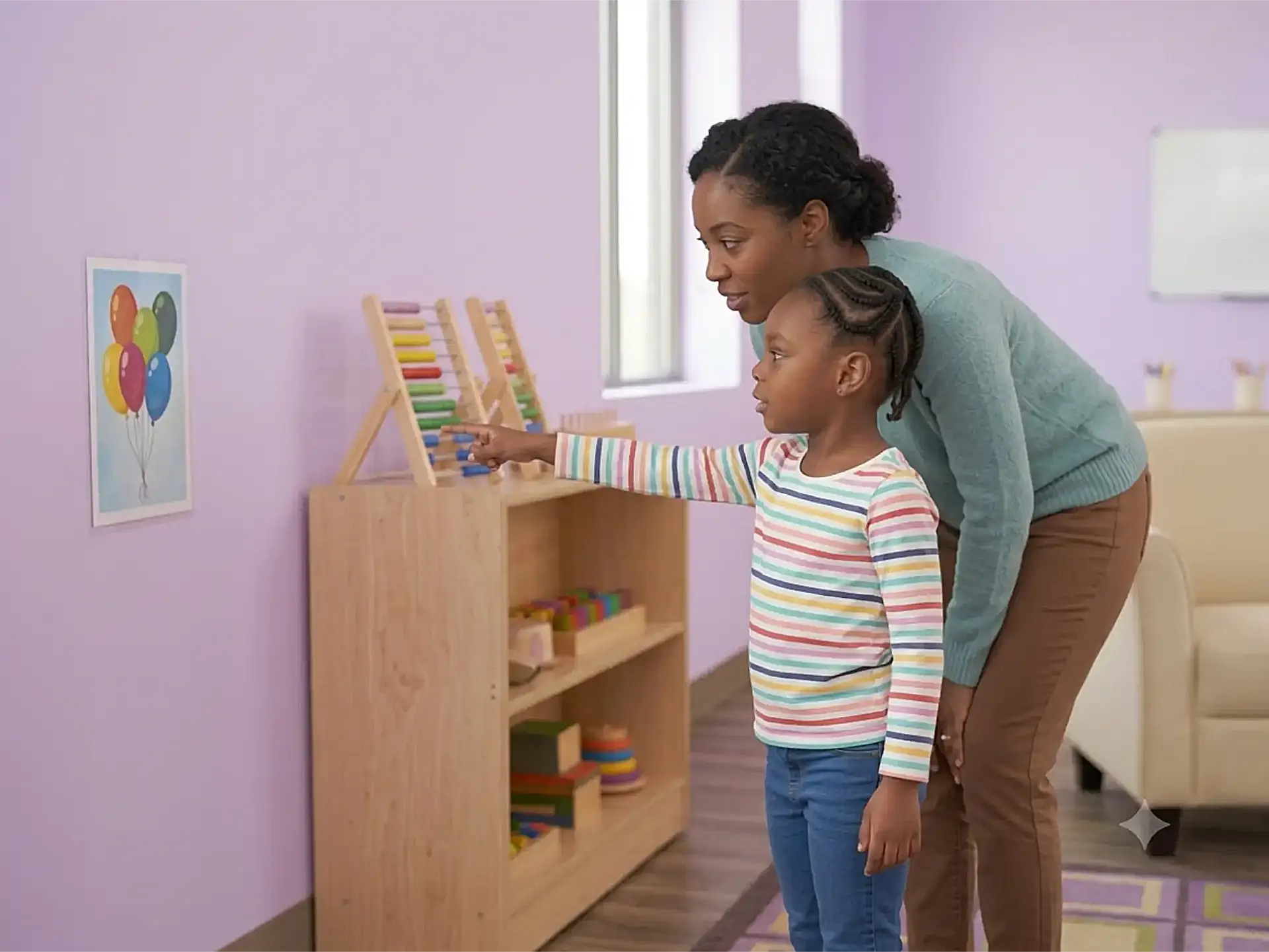
How ABA addresses developmental delays:
1. Skill Acquisition:
ABA programs focus heavily on building missing skills across multiple domains:
- Communication: Teaching verbal language, picture exchange communication systems (PECS), or sign language to express wants and needs.
- Social Skills: Practicing eye contact, sharing, taking turns, and understanding social cues.
- Adaptive/Life Skills: Learning daily routines like toilet training, dressing, brushing teeth, and eating independently.
- Motor Skills: Strengthening both fine motor skills (like holding a pencil) and gross motor skills (like jumping) through repetitive, positive reinforcement.
2. Behavior Reduction
If a child struggles to communicate or cope with environmental changes, they may exhibit challenging behaviors (e.g., tantrums, aggression, or self-injury). ABA helps by:
- Identifying the function of the behavior (Why is the child doing this? Is it to escape a task, get attention, or obtain an item?).
- Teaching a replacement behavior that is safer and more functional (e.g., pointing to a picture instead of screaming)